
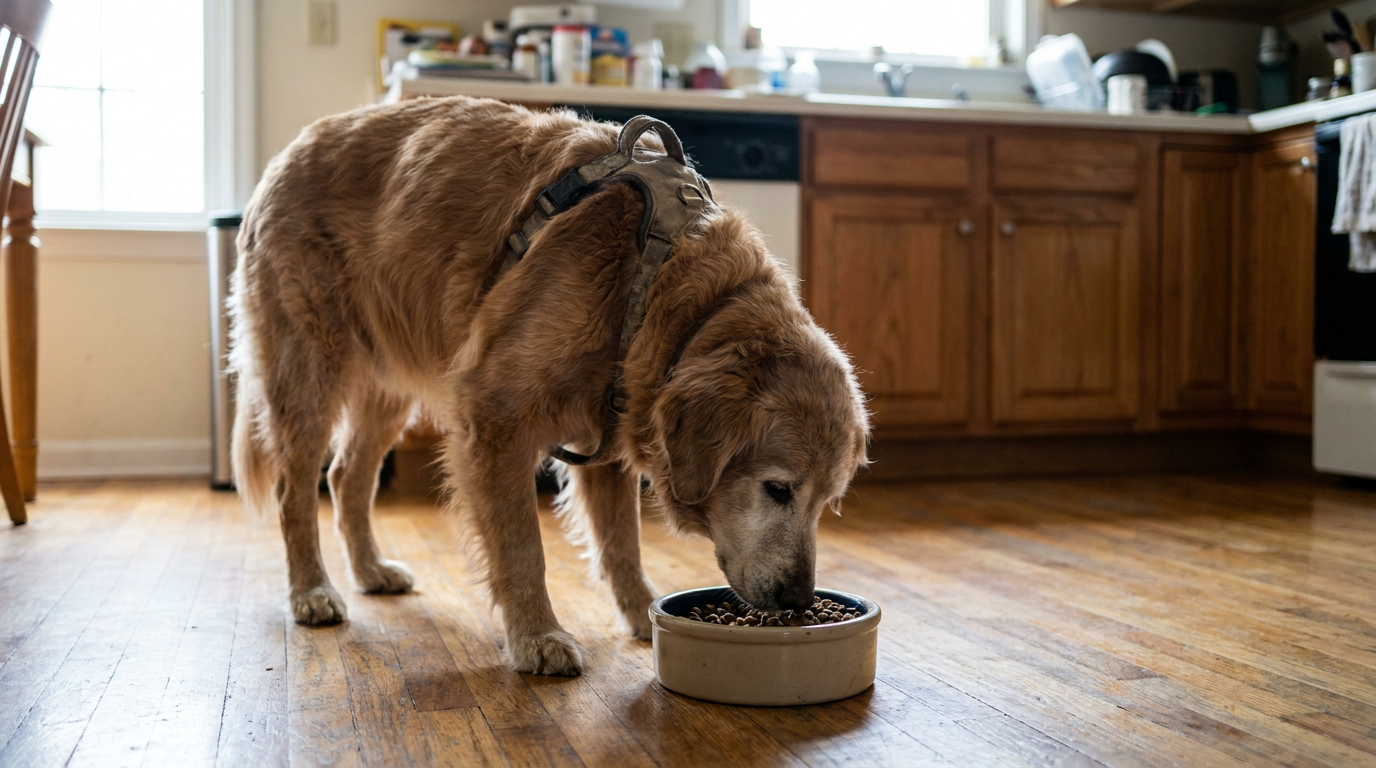
Best Food for Older Dogs: How to Choose the Right Senior Diet
Aging Paws Guide is reader-supported: as an Amazon Associate we earn from qualifying purchases made through links on this page, at no extra cost to you.
When a dog enters their senior years, their nutritional needs shift — and the food that kept them thriving at three may not be the best choice at eleven. Older dogs tend to be less active, can gain or lose weight more easily, and often deal with changes in digestion, joints, and organ function. Choosing the right food becomes one of the most practical things you can do to support a comfortable, healthy old age.
This guide explains what actually matters when choosing food for a senior dog, what to look for on the label, and how to match the food to your individual dog. As always: your veterinarian knows your dog’s specific health, so before making a significant diet change — especially for a dog with a medical condition — it’s worth a quick conversation with them.
When is a dog “senior”?
There’s no single birthday that makes a dog senior. As a rough guide, large and giant breeds age faster and may be considered senior around six to seven, while small breeds often aren’t until closer to ten. Your vet can tell you where your individual dog sits. The shift to senior food isn’t about hitting an exact age — it’s about responding to the changes you and your vet notice.
What older dogs actually need from their food
High-quality, easy-to-digest protein
Older dogs still need good protein to maintain muscle mass — in fact, maintaining muscle becomes more important with age, not less. The key is quality and digestibility. Look for named animal proteins (chicken, beef, fish, lamb) high on the ingredient list rather than vague “meat by-products.”
The right calories for a slowing metabolism
Many senior dogs are less active and burn fewer calories, which makes weight gain easy. At the same time, some older dogs struggle to keep weight on. The “right” calorie level depends entirely on your individual dog’s body condition — which is why senior foods vary so much, and why your vet’s read on whether your dog is over, under, or at a healthy weight is so useful.
Joint support ingredients
Many senior formulas include glucosamine, chondroitin, or omega-3 fatty acids to support aging joints. For a dog dealing with stiffness, food that builds in this support can be a convenient way to help — though the amounts in food are often modest, which is why some owners add a dedicated joint supplement or a specific glucosamine product alongside the diet.
Digestible fiber
Fiber supports healthy digestion, which can become more temperamental with age. Moderate, quality fiber sources help keep things regular without upsetting a sensitive stomach.
Easier-to-eat textures
Dental issues are common in older dogs, and some seniors find dry kibble harder to manage. Wet food, softened kibble, or formulas designed to be gentler on the mouth can make eating more comfortable for a dog with sore teeth or gums.
Dry, wet, or a mix?
There’s no universally “best” format — it depends on your dog.
Dry food is convenient, economical, and can support dental health through chewing, but it’s harder for dogs with dental problems. Wet food is more palatable and hydrating, and far easier for dogs with sore mouths or reduced appetite, though it’s pricier and spoils faster once opened. Many owners land on a mix — kibble as the base with some wet food stirred in to boost appeal and moisture. For a picky or struggling senior eater, that combination often works well.
Special diets for specific health conditions
This is where individual guidance matters most. Senior dogs commonly develop conditions — kidney disease, heart issues, diabetes, food sensitivities — that call for specific therapeutic diets. These prescription diets are formulated for the condition and should only be used under veterinary direction. If your dog has a diagnosed health issue, the “best food” question is really a question for your vet, not a label comparison.
How to read a senior dog food label
A few practical pointers cut through the marketing:
Check that a named protein appears at the top of the ingredient list. Look for a statement that the food is “complete and balanced” for the appropriate life stage (in the US, this references AAFCO nutritional standards). Be wary of foods leaning hard on vague marketing terms while burying low-quality ingredients. And remember that “senior” on the bag isn’t a regulated guarantee of anything specific — the ingredient list and nutritional adequacy statement tell you more than the word on the front.
How to transition to a new food
Whatever food you choose, switch gradually to avoid digestive upset. A typical approach is to mix a small amount of the new food with the old over about a week to ten days, slowly increasing the new and decreasing the old. Older dogs with sensitive stomachs may need an even slower transition. If your dog develops persistent digestive upset during a switch, check in with your vet.
The bottom line
The best food for your older dog is the one that matches their individual needs — appropriate calories for their body condition, quality digestible protein, a texture they can comfortably eat, and any condition-specific requirements your vet identifies. Start by honestly assessing your dog’s weight, dental health, and any medical issues, and use that — alongside your vet’s input — to guide the choice. Good senior nutrition won’t reverse aging, but it’s one of the most reliable ways to keep an older dog comfortable, energetic, and well for as long as possible.
Aging Paws Guide provides general information for dog owners and is not a substitute for professional veterinary care. We are not veterinarians. Always consult a licensed veterinarian about your dog’s diet, especially for a senior dog or one with a diagnosed health condition.