Senior Dog Daycare: What Actually Works for Older Dogs
Senior Dog Daycare: What Actually Works for Older Dogs
Heads up: some links on this site may be affiliate links, meaning we may earn a small commission at no extra cost to you.
Senior dog daycare is a genuinely good option for some older dogs — and a genuinely bad one for others. The difference usually comes down to three things: the individual dog, the specific facility, and how well the two are matched. Most of the anxiety around this topic comes from treating it as a yes-or-no question when it’s really a matter of fit.
Here’s what experience with older dogs actually tells us.
Why Senior Dogs Have Different Daycare Needs
A seven-year-old Lab and a seven-year-old Chihuahua are not in the same life stage. A dog who’s been in daycare since puppyhood handles it differently than one being introduced at age ten. These specifics matter more than any general rule about “senior dogs.”
That said, some needs do cluster around older dogs as a group:
- Joint pain and mobility issues. Slick floors, stairs, and rough play from younger dogs can cause real harm. A dog with early arthritis can’t always signal distress fast enough when a 50-pound adolescent bowls into them.
- Lower heat and cold tolerance. Thermoregulation gets harder with age. A facility that keeps things cool for high-energy young dogs may be too cold for a thin-coated senior.
- Fatigue. Older dogs tire faster and need actual rest periods, not just a corner to retreat to while chaos continues around them.
- Cognitive changes. Dogs with canine cognitive dysfunction (doggy dementia) can become confused or anxious in unfamiliar environments, especially by afternoon when sundowning tends to peak.
- Medication schedules. Many seniors are on daily medications — thyroid meds, joint supplements, heart medications — that need to be administered during daycare hours.
None of these are dealbreakers on their own. But they mean you need to ask specific questions, not just tour the facility and look for cleanliness.
What to Look for in a Facility
Genuine Separation by Energy Level — Not Just Size
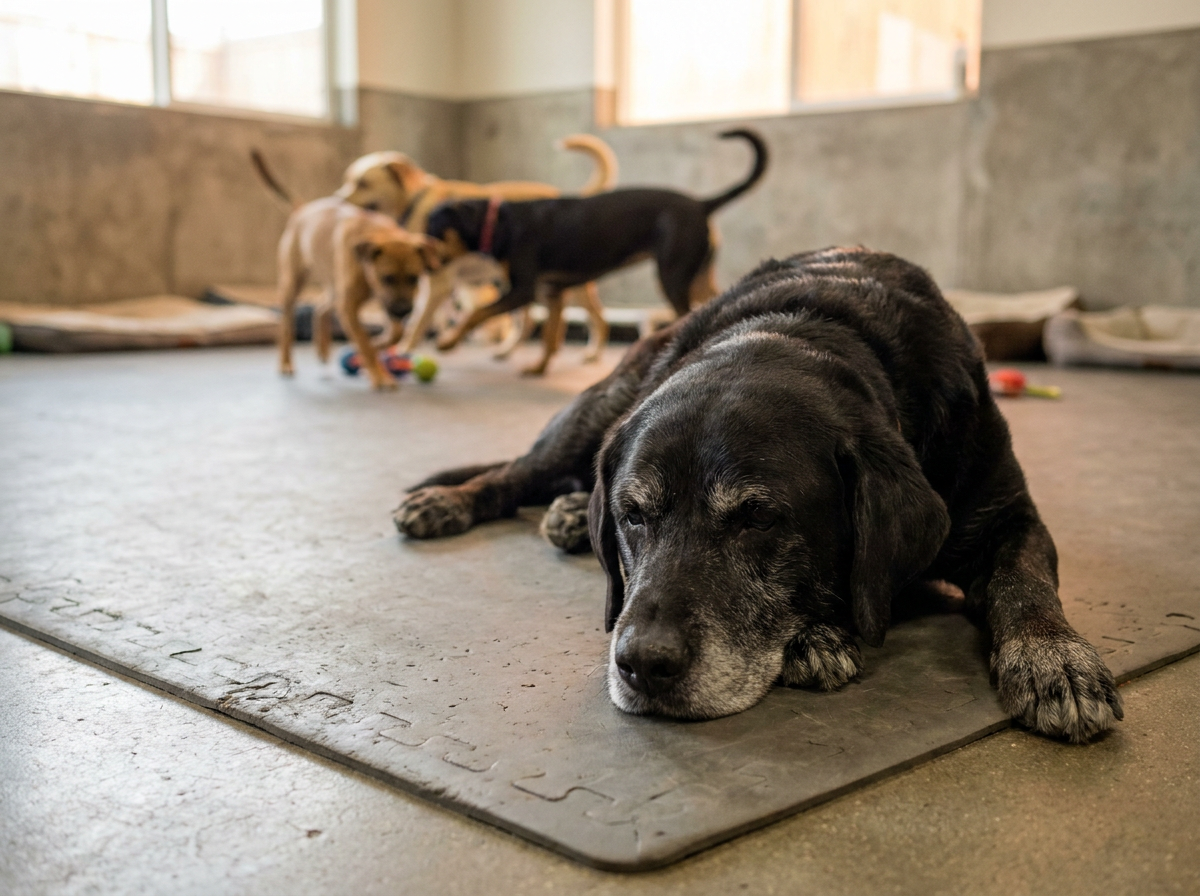
Most decent daycares separate dogs by size. Fewer separate by energy level or temperament, which matters much more for seniors. A calm, low-energy 70-pound senior dog does not belong in the large-dog play group with active two-year-olds. Ask directly: Do you have a calm or senior-specific group? If the answer is no, that’s important information.
Some facilities run a dedicated senior dog daycare program with its own space, lower dog-to-staff ratios, and quieter activity levels. These exist, especially in larger metro areas, and they’re worth seeking out if your dog struggles in high-stimulation environments.
Flooring
This sounds minor. It isn’t. Hard, slick floors are a serious hazard for dogs with arthritis or rear-end weakness. Look for rubber matting, carpet tiles, or textured surfaces in the play areas. Dogs with hip dysplasia or degenerative myelopathy can slip, fall, and injure themselves — or simply exhaust themselves trying to stay stable.
Nap and Rest Protocols
Ask how rest periods are structured. Is there a quiet room? Are dogs separated for naps or expected to settle on their own among active dogs? A facility that forces seniors to “power through” a full day of stimulation without genuine downtime is not the right place for a tired 11-year-old.
Staff Knowledge of Senior Health Signs
The staff member you talk to should be able to tell you what they’d do if they noticed your dog was limping, seemed confused, or wasn’t eating. Not a rehearsed answer — an actual protocol. Ask how they handle medications. Ask if anyone on staff has experience with dogs with mobility issues or cognitive changes. The answers reveal a lot.
Temperature Control
Many daycares keep their spaces cooler to manage high activity levels. Seniors, especially lean dogs or short-coated breeds, can get uncomfortably cold. Ask about temperature ranges and whether there’s a warmer space available.
Signs Your Senior Dog Is a Good Candidate
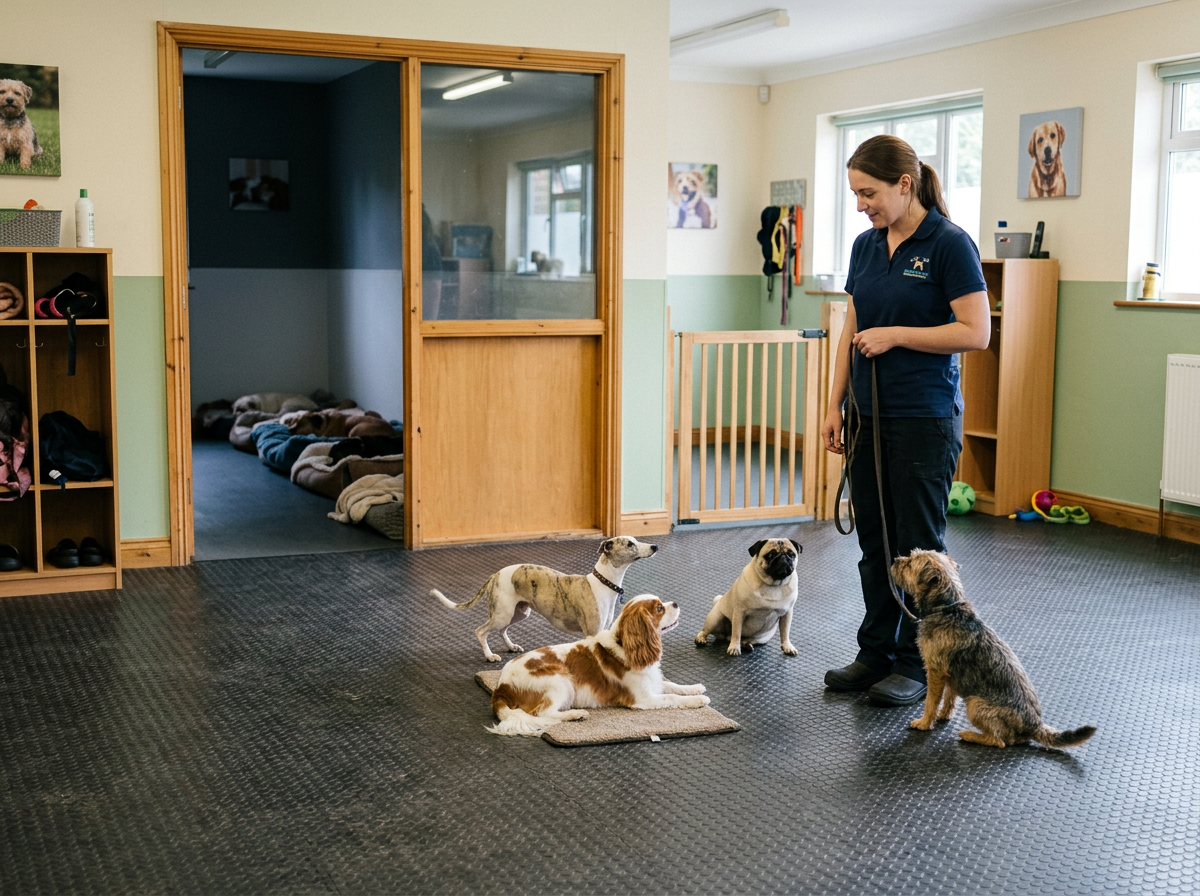
Some dogs thrive in daycare well into their senior years. Watch for these positive indicators:
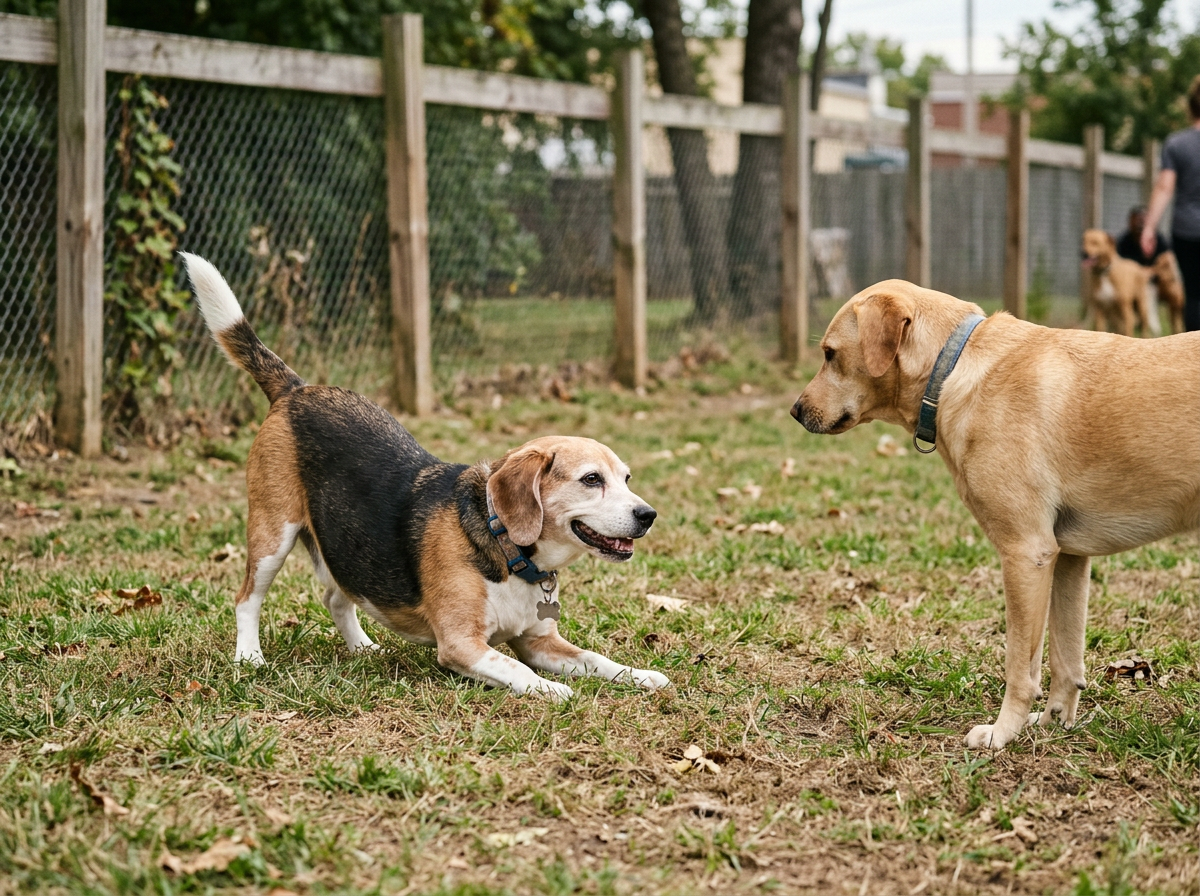
- Still socially motivated. A dog who genuinely enjoys the company of other dogs — and shows it through loose body language, play bows, reciprocal interaction — can benefit from daycare’s social stimulation.
- Mentally sharp. Dogs without cognitive dysfunction handle novel environments and changing social dynamics much better.
- Physically stable. A senior who moves well, has managed pain levels, and has no significant mobility challenges is a reasonable candidate if the facility is a good match.
- History with daycare. Dogs who’ve been in daycare before already know how it works. The social fluency and comfort with the environment are already established.
Signs Daycare May Not Be Right Anymore
Some dogs age out of daycare, and recognizing this early prevents real stress and potential injury.
- Comes home exhausted and takes days to recover. One day of daycare shouldn’t wipe a dog out for three days. That level of fatigue is a signal.
- Anxious or confused at drop-off. A dog who was always excited to go and is now stressed, clingy, or disoriented at the door may be experiencing cognitive changes that make the environment overwhelming.
- Pain-managed but not pain-free. A dog on NSAIDs for arthritis can still participate in daycare — with the right facility — but a dog whose pain is poorly controlled is a liability risk in a group play setting.
- Reactive or grumpy with other dogs. Pain and cognitive changes can cause older dogs to become reactive in ways they never were before. That’s not a character flaw; it’s a medical symptom. But it does make group daycare inappropriate until it’s addressed.
Alternatives Worth Considering
Senior dog daycare isn’t the only option for dogs who need daytime supervision and stimulation. Depending on your dog’s needs:
In-home pet sitters can visit once or twice during the day, which is lower-stimulation and far less physically demanding. For dogs with moderate mobility issues or early cognitive changes, this is often a better fit.
Small private daycares — someone who watches three or four dogs in their home — can offer a much calmer environment than a commercial facility. The dog-to-human ratio is higher, the noise level is lower, and a good home-based sitter often gives individual dogs far more attention.
Dog walkers with senior experience may be all some dogs actually need. A mid-day walk and some company goes a long way.
The goal is enrichment and supervision, not necessarily daycare specifically. Match the solution to what the dog actually needs.
The Trial Day: How to Use It Well
Almost every facility offers a trial or evaluation day. For seniors, treat this as a genuine assessment, not a formality.
Ask the facility to give you honest feedback on how your dog did — not reassuring feedback, honest feedback. Did they eat? Did they rest? How were they in the group? Any signs of stress, confusion, or physical difficulty?
Pay attention to your dog when you pick them up and over the next 24-48 hours. Excitement at pickup, good appetite that evening, and normal sleep patterns are positive signs. Excessive panting, restlessness, unusual stiffness, or total collapse into sleep for an extended period are worth taking seriously.
One trial day isn’t always enough to know. Some dogs take two or three visits to settle into a new routine. But if the stress signals are strong from the start, pushing through rarely helps.
One Last Thing
The best senior dog daycare situation isn’t necessarily the fanciest facility or the one closest to your office. It’s the one where the staff actually knows your dog’s name by the second visit, where someone would notice if something seemed off, and where the pace of the day matches what your dog’s body and brain can handle. That’s a standard any facility can meet — and a clear bar for deciding when one doesn’t.