Eye Problems in Older Dogs: What’s Normal and What’s Not
Eye Problems in Older Dogs: What’s Normal and What’s Not
Disclosure: Some links in this article may be affiliate links, meaning we may earn a small commission if you purchase through them, at no extra cost to you.
The first thing most people notice is the cloudiness. Their dog’s eyes, once dark and sharp, start looking hazy — almost like someone fogged up a glass. It’s unsettling. And it immediately raises the question: is this dangerous, or just aging?
Eye problems in older dogs are genuinely common, and they run the full spectrum from completely benign to vision-threatening conditions that need treatment fast. The tricky part is that several of them look similar from the outside. Knowing the difference matters, both for your dog’s quality of life and for making smart decisions about veterinary care.
This article breaks down the most common conditions, what they actually look like in practice, and the signs that should get you on the phone with your vet today rather than next week.
Nuclear Sclerosis: The One That Looks Scary But Usually Isn’t
This is the most common eye change in senior dogs, and it’s frequently mistaken for cataracts. Nuclear sclerosis (also called lenticular sclerosis) is the hardening and compression of lens fibers as a dog ages. The lens takes on a bluish-gray, hazy appearance — often symmetrical in both eyes.
The key distinction: nuclear sclerosis doesn’t significantly impair vision. Most dogs with it navigate their environment just fine. They can still catch a ball, find their food bowl in the dark, and track your movements across a room.
A vet can tell the difference with an ophthalmoscope. In nuclear sclerosis, light still reflects clearly through the lens. With cataracts, it doesn’t. If your dog’s eyes have gone cloudy but their behavior seems unchanged, nuclear sclerosis is the likely culprit — and it requires no treatment.
Cataracts in Senior Dogs
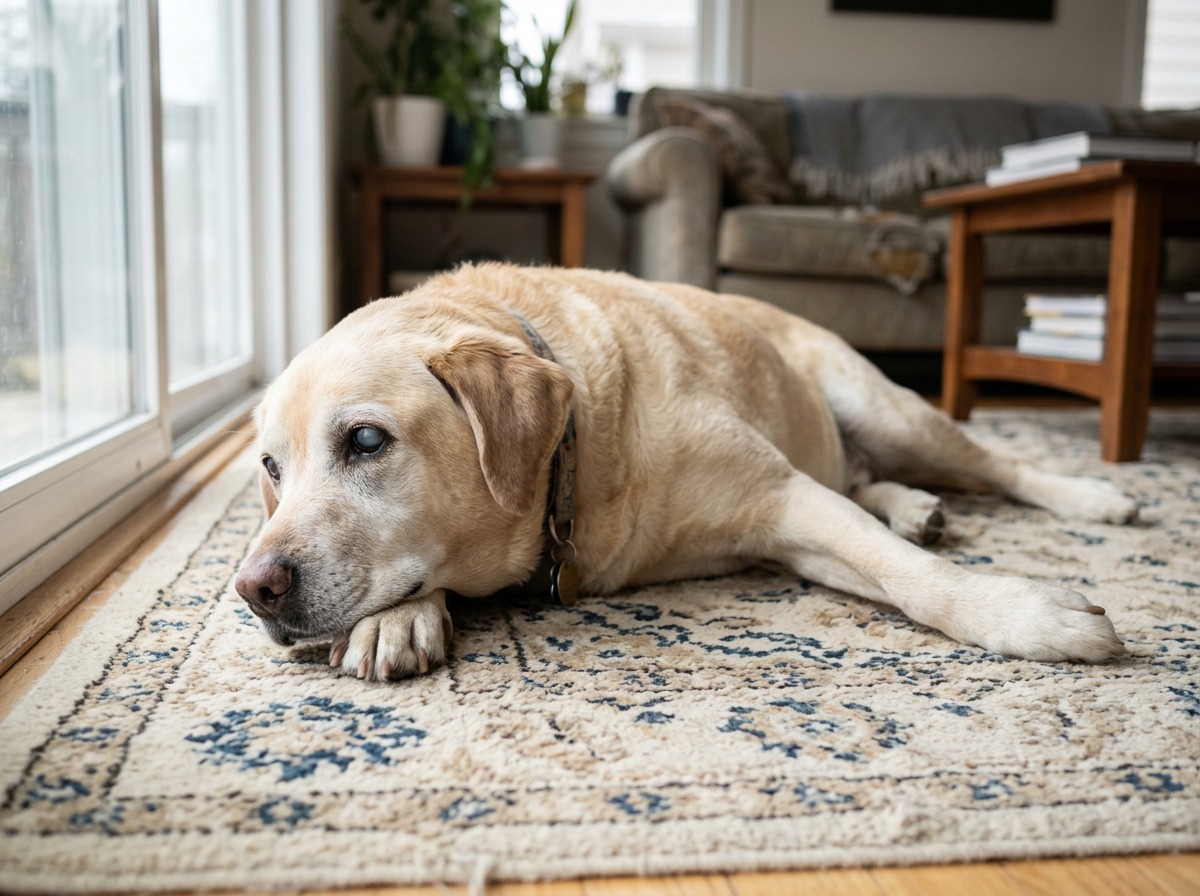
Cataracts are different. They’re an actual opacity of the lens — and depending on how much of the lens is affected, they can cause partial or complete blindness.
Diabetic dogs are especially prone to cataracts. If your senior dog has been diagnosed with diabetes, watch their eyes closely; cataracts can develop rapidly, sometimes within months of diagnosis. But cataracts also occur in non-diabetic seniors, and some breeds (including Labrador Retrievers, Cocker Spaniels, and Bichon Frises) have higher genetic predisposition.
Signs that suggest cataracts rather than nuclear sclerosis:
– Dense white or opaque appearance, not just hazy
– Asymmetry — one eye more affected than the other
– Bumping into furniture, hesitation in new environments, reluctance to navigate stairs
– Pupils don’t reflect light normally
Surgery is the only treatment that restores vision, and it works well when performed before the cataract becomes hypermature (overripe). Hypermature cataracts can trigger a painful inflammatory response called lens-induced uveitis, which can cause permanent damage and glaucoma. That’s why timing matters. If you’re seeing true cataract signs, get a referral to a veterinary ophthalmologist sooner rather than later.
Dry Eye (Keratoconjunctivitis Sicca)
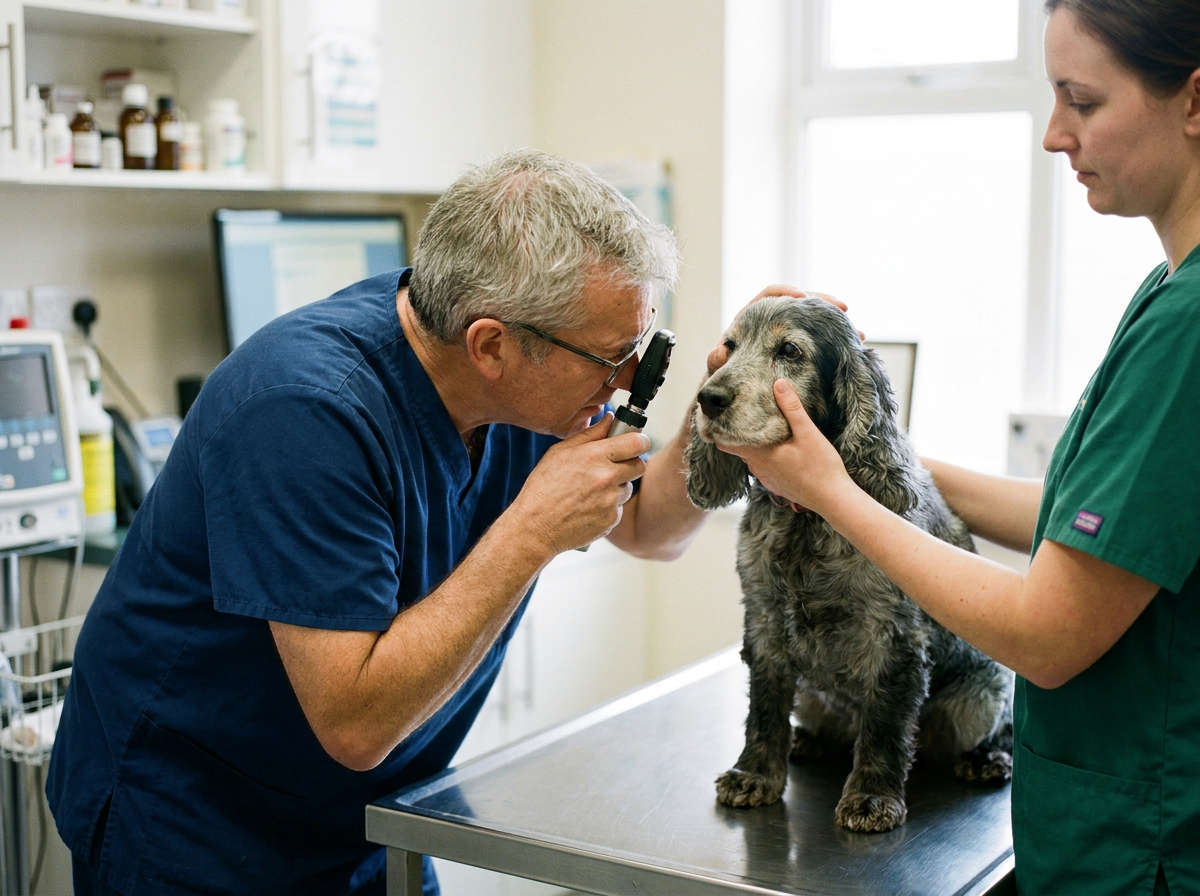
Dry eye — formally called KCS — is one of the more underdiagnosed eye problems in older dogs. The tear glands stop producing adequate tears, the surface of the eye dries out, and chronic irritation and infection follow.
What it looks like: thick, ropy, yellowish or greenish discharge at the corners of the eyes. The eye surface itself often looks dull rather than bright and glistening. Dogs with KCS frequently squint, blink excessively, or paw at their eyes.
Left untreated, dry eye causes chronic corneal damage and can lead to scarring that permanently affects vision. The good news is that it’s very manageable. Cyclosporine or tacrolimus drops stimulate tear production in most dogs. Many owners see dramatic improvement within weeks of starting treatment. It’s a lifelong commitment, but a daily eyedrop routine is genuinely life-changing for affected dogs.
Cocker Spaniels, Bulldogs, Shih Tzus, and West Highland White Terriers are among the breeds most commonly affected.
Glaucoma: Act Fast
Glaucoma is the condition that vets genuinely worry about, and for good reason. It’s painful, it progresses quickly, and delayed treatment means permanent vision loss.
Glaucoma occurs when fluid pressure inside the eye builds beyond normal levels, damaging the optic nerve. In dogs it’s often secondary to other conditions — uveitis, lens luxation, or chronic cataract inflammation.
The problem is that the early signs are easy to miss or misread:
– Subtle cloudiness or redness in one eye
– Squinting or keeping one eye partially closed
– Slightly enlarged eyeball (not always obvious)
– Lethargy or reduced appetite (the headache associated with increased eye pressure is significant)
As it progresses, the eye becomes noticeably enlarged and very red, and vision loss accelerates. By the time the eye looks dramatically wrong, damage may already be severe.
If your dog suddenly has a red, painful-looking eye — especially one that seems swollen or larger than the other — call your vet immediately. Don’t wait for the next available appointment. This is genuinely a same-day situation.
Entropion and Eyelid Tumors
Entropion
Entropion is the inward rolling of an eyelid, causing the eyelashes to rub against the cornea. It’s most common in breeds with loose facial skin — Shar-Peis, Chows, Bulldogs, Bloodhounds — but it can develop or worsen in any senior dog as facial muscle tone changes with age.
Constant corneal irritation from eyelashes causes squinting, tearing, discharge, and eventually corneal ulcers. Surgical correction is effective and provides immediate relief.
Eyelid Masses
Eyelid growths are extremely common in older dogs. Most are benign — sebaceous adenomas, melanocytomas, papillomas — and many dogs carry them for years without issue. The problem comes when a growth grows large enough to contact the cornea, causing chronic irritation and ulceration.
The decision to remove is usually based on location and size rather than fear of malignancy. A growth sitting right on the lid margin is more likely to cause problems than one sitting back from the eye. Your vet can advise on timing.
Corneal Ulcers in Senior Dogs
Older dogs, particularly certain breeds, are prone to a specific type of ulcer called a Spontaneous Chronic Corneal Epithelial Defect (SCCED) — sometimes called indolent ulcers or boxing ulcers. These are non-healing, superficial ulcers that don’t hurt as much as deep ulcers and tend to persist for months without proper treatment.
Boxers, Pembroke Welsh Corgis, and Golden Retrievers are commonly affected, though any senior dog can develop them.
Signs include squinting, pawing at the eye, and visible haziness or a grayish spot on the cornea. Standard ulcer treatment (antibiotic drops and rest) often doesn’t resolve them. They typically need a procedure called debridement — roughing up the ulcer bed to encourage healthy healing. This sounds alarming but is usually done in clinic with topical anesthesia and has good outcomes.
What You Can Do at Home
You’re the first line of detection. The changes that matter most tend to be things you notice in daily life — squinting that wasn’t there last week, discharge that keeps coming back, a reluctance to go into dim lighting.
A few practical habits:
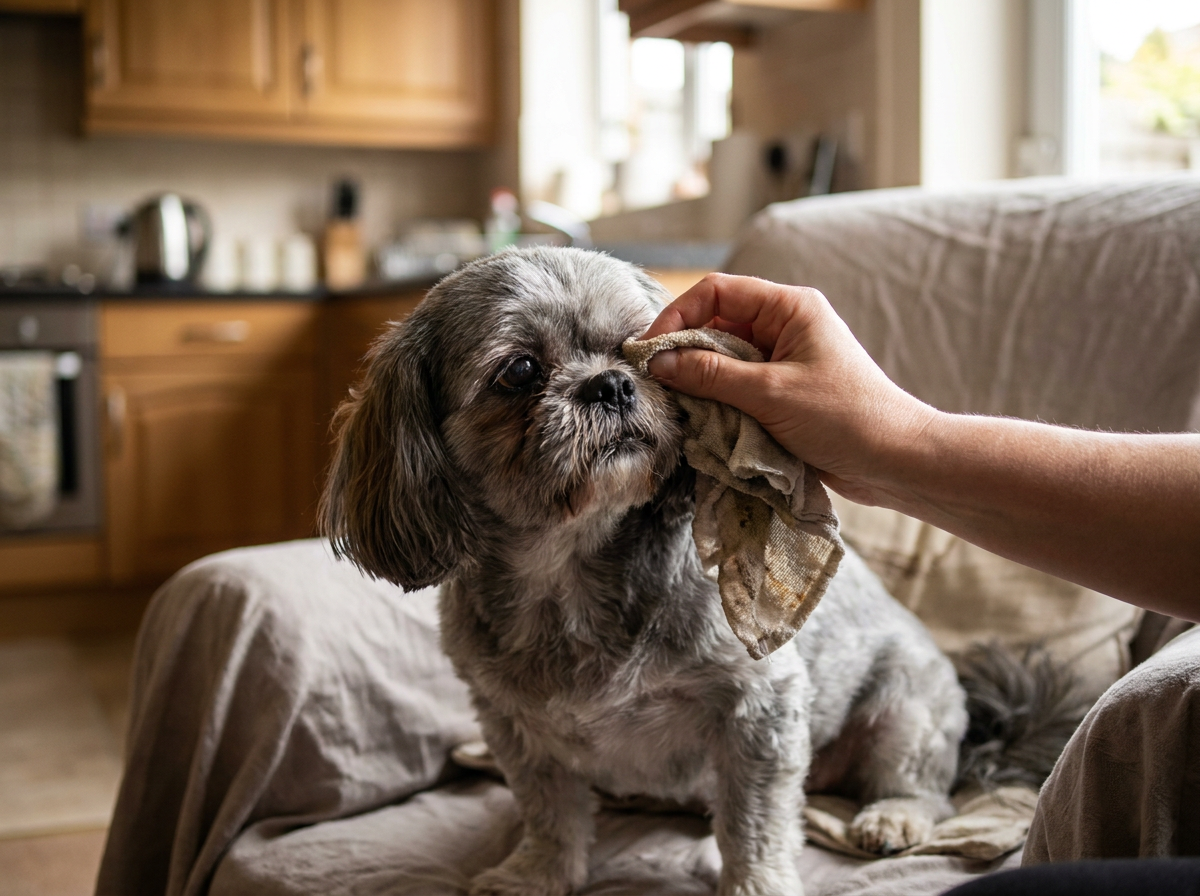
Clean discharge gently. Use a soft, damp cloth or pet-safe eye wipes to remove crusty buildup around the eye. Never use cotton balls near the eye itself — fibers can transfer. Don’t use human eye drops unless specifically directed by your vet.
Watch for asymmetry. Normal aging tends to affect both eyes similarly. One eye that looks dramatically different from the other — cloudier, redder, more closed, more watery — deserves attention.
Do a monthly check. Good lighting, eye-level with your dog. Look at the white of the eye, the clarity of the lens, and the discharge level. You’ll develop a baseline that makes changes easier to spot.
Keep hair trimmed around the eyes. Long facial hair that contacts the eye causes chronic low-grade irritation and secondary infection. Regular grooming is genuinely preventive care.
When to Call the Vet
Get seen within 24 hours if you notice:
– Sudden redness, especially if the eye looks enlarged
– Squinting that came on quickly
– Pawing at one eye
– Any sign of pain (face rubbing on carpet, reluctance to have the head touched)
– Sudden change in behavior suggesting reduced vision
Eye problems in older dogs that involve pain or pressure are emergencies. The eye is unforgiving — hours matter in conditions like glaucoma and corneal injury.
For slower-developing changes like increasing cloudiness, persistent low-level discharge, or a growing lid mass, a standard appointment within a week or two is reasonable. But don’t keep putting it off — “I’ll mention it at the next checkup” has cost more than a few senior dogs their vision.
Your vet can refer to a board-certified veterinary ophthalmologist for complex cases. These specialists deal with the full range of eye problems in older dogs every day, and their diagnostic tools — including tonometry for eye pressure and slit-lamp examination — go well beyond what a general practice can offer. The referral is often worth making.