Cat Arthritis Treatment: What Actually Works
Cat Arthritis Treatment: What Actually Works
Disclosure: Some links in this article may be affiliate links, meaning we may earn a small commission if you make a purchase — at no extra cost to you.
Most cats with arthritis don’t limp. They just quietly stop jumping onto the couch, start missing the litter box, or groom less. By the time owners notice something is wrong, the joint damage has often been progressing for months or years. Understanding cat arthritis treatment means understanding this: you’re almost always catching it late, and the goal is managing pain and preserving mobility — not reversing what’s already happened.
Here’s what veterinary medicine and hands-on senior cat care actually look like in practice.
Get a Diagnosis First — This Step Matters More Than You Think
Before anything else, see a vet. Arthritis symptoms overlap heavily with hyperthyroidism, kidney disease, and dental pain. A cat who’s grumpy, moving slowly, and drinking more water might have three different conditions at once. Blood panels, urinalysis, and X-rays together give you a real picture.
Arthritis in cats most commonly affects the elbows, hips, and spine. Vets often find it incidentally on X-rays taken for something else entirely. Once you have a confirmed diagnosis, treatment can be targeted and effective.
Medications: The Foundation of Pain Management
NSAIDs — Use With Caution and Monitoring
Non-steroidal anti-inflammatory drugs reduce joint inflammation and are often the first line of pharmaceutical cat arthritis treatment. Cats metabolize drugs very differently from dogs or humans, and most human NSAIDs — including ibuprofen and aspirin — are toxic to cats. Full stop.
There are veterinary-specific NSAIDs approved for cats, and your vet will choose based on your cat’s kidney function and overall health. Routine blood work every six months is standard when a cat is on long-term NSAIDs. This isn’t optional — kidney and liver values need monitoring.
Monoclonal Antibody Therapy
This is genuinely new territory. An injectable monoclonal antibody treatment specifically targeting feline joint pain has become available in recent years. It works by neutralizing a protein involved in pain signaling. Monthly injections, given by a vet or in some cases at home after training, have shown meaningful results in clinical studies — cats grooming more, jumping again, using the litter box consistently.
It’s not cheap, and not every cat responds dramatically, but for cats who can’t tolerate NSAIDs due to kidney issues, it’s often the better option. Ask your vet specifically about this class of treatment if it hasn’t come up.
Gabapentin
Originally an anticonvulsant, gabapentin is widely used for chronic pain in senior cats. It’s generally well tolerated, inexpensive, and easy to administer in a compounded liquid form. Many vets use it alongside other medications rather than as a standalone treatment. Side effects are usually mild — some sedation initially, which often fades.
Corticosteroids
Steroids reduce inflammation effectively but come with significant long-term side effects — increased thirst, weight gain, diabetes risk, immune suppression. They’re typically reserved for cats who can’t use other options, or for short-term flare management. Not a first choice for chronic arthritis.
Joint Supplements: What Has Real Evidence
The supplement market for pets is noisy and often oversells. Two ingredients have the most credible research behind them:
Omega-3 fatty acids (specifically EPA and DHA from fish or marine sources) reduce inflammatory mediators in joint tissue. The evidence is reasonably solid. Dose matters — the amount in most generic cat foods is too low to have a therapeutic effect. A vet-recommended fish oil supplement formulated for cats, dosed correctly for body weight, is worthwhile.
Glucosamine and chondroitin are in almost every joint supplement, and the research in cats is less conclusive than in dogs. That said, they appear safe, and some cats show improvement. Consider them supportive, not curative.
Avocado/soybean unsaponifiables (ASU) are showing up in newer veterinary joint formulas and have some positive data. Not essential, but not a red flag either.
Skip anything marketed with vague language about “joint support” but no clear active ingredients listed.
Weight Management: Underrated and Underused
Extra weight means extra load on already damaged joints. A cat who is even half a kilogram overweight is carrying a meaningful burden relative to their size. Weight loss, when needed, is one of the most impactful interventions in cat arthritis treatment — and it costs nothing beyond changing what’s in the food bowl.
High-protein, lower-calorie wet food is often the practical solution. Wet food also supports kidney hydration, relevant in older cats. Work with your vet to set a realistic target weight and a timeline. Rapid weight loss in cats carries its own risks (hepatic lipidosis), so slow and steady is the protocol.
Home Modifications That Make a Real Difference
Medication handles the internal inflammation. The environment handles the daily friction. Both matter.
Litter boxes: Low-sided boxes, or boxes with a single cut-out entry point, remove the need for arthritic cats to step over a high wall. Many inappropriate elimination problems in senior cats disappear when the box becomes physically accessible again.
Ramps and steps: If your cat used to sleep on your bed or a favorite chair, they haven’t stopped wanting to — they’ve just stopped being able to jump. A carpeted pet ramp or a set of wide, shallow stairs gives them that access back. Carpet matters; smooth surfaces are hard to grip with stiff limbs.
Sleeping surfaces: An orthopedic cat bed with memory foam or supportive fill reduces pressure on joints overnight. Heated options are particularly useful — warmth eases stiffness, and senior cats lose body heat faster. Keep beds on the floor or at the bottom of a ramp, not on elevated surfaces they now struggle to reach.
Food and water placement: Bowls on the floor mean a cat with spinal or neck arthritis has to crane down repeatedly. A raised bowl stand at a comfortable height removes that strain. This is a small change with a noticeable effect on daily comfort.
Non-slip flooring: Hardwood and tile are rough on arthritic cats. Yoga mats, carpet runners, or interlocking foam tiles in high-traffic paths give traction without requiring a full renovation.
Physical Therapy and Acupuncture
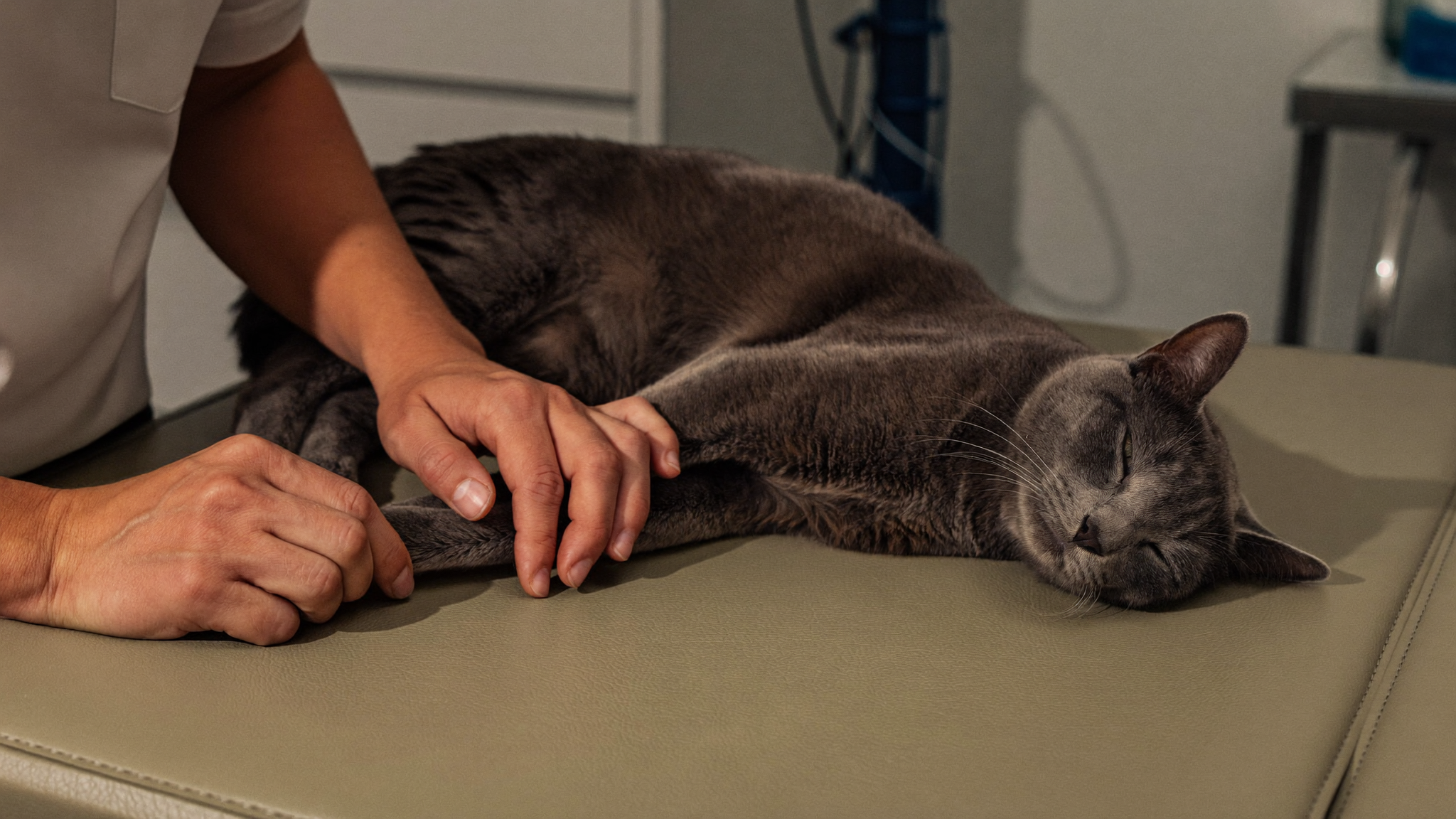
Veterinary rehabilitation is a real specialty, not a fringe concept. Certified veterinary rehabilitation practitioners use underwater treadmills, therapeutic exercises, and massage techniques adapted from human physical therapy. For severe arthritis cases, it can meaningfully extend a cat’s comfortable, mobile life.
Acupuncture for cats is similarly evidence-supported in the veterinary literature for chronic pain. Not every cat tolerates the needles, but many become remarkably still and relaxed during sessions — suggesting it’s doing something. It’s typically used as an adjunct to pharmaceutical treatment, not a replacement.
Monitoring: How to Know If Treatment Is Working
Cats don’t complain loudly. You measure success by watching behavior, not listening for pain cries.
Keep a simple weekly log: Is your cat grooming their lower back and hindquarters? Jumping onto preferred spots? Using the litter box cleanly every time? Engaging with people or toys? Sleeping in different positions?
Improvements in these markers — not just X-ray changes — are how effective cat arthritis treatment gets measured in practice. If things aren’t improving after a reasonable trial period, go back to your vet. There are usually more options to try, and a combination approach often works better than any single intervention.
Arthritis doesn’t have to mean a cat’s quality of life collapses. It means paying closer attention, adjusting consistently, and working closely with a vet who takes senior cat pain seriously. The cats who do best have owners who noticed the subtle signs and acted on them.